A refugee said "I cannot go back to my country because of the following points: 1. Imprisonment and Persecution 2. Torture and punishment 3. Electric torture 4. Beating with the stick on the feet (corporal punishment) 5. threatening me to be killed 6. Lack of human rights organizations which can lobby against human rights violation in the country. 7. Threatening to abuse my family members. 8. Demolition of my house. Due to all that I can’t go back".

Home Page

Feb 8, 2011

Councillor Brid Smith in support of Egyptian struggle


Emergency Motion passed at Dublin City Council 8th February, 2011

This Council declares its total solidarity with the heroic democracy protesters of Egypt, and especially with those currently occupying Tahrir (Liberation) Square. It strongly supports their demands: for the immediate removal of the dictator, Hosni Mubarak, from his office as President; for the repeal of the anti-democratic Emergency Law (which since 1981 has given the notorious State Security Forces the right to detain people without charge or trial); for the dismantling of the whole Mubarak regime of murder torture and corruption; for full freedom of the press and genuine democratic elections. This Council resolves to refuse all collaboration with the illegitimate Mubarak Government or its agents .
This Council also calls upon the Irish Government to; a) end all diplomatic relations with the Mubarak/Suleiman regime until such time as a new democratically elected government is established; b) to make a public statement of its support for the democracy movement; c)to vote accordingly at the United Nations and in the EU Council of Ministers and European Parliament; d) to call publicly for Mubarak to be put on trial at the International Court of Human Rights at the Hague.

- Councillor Brid Smith
People Before Profit Alliance

NOTES
The Mubarak Regime
Mubarak – formerly VP – became President in 1981.Since then he has been “re-elected” four times. In 1987, 1993, and 1999 noone was allowed to run against him. In 2005 (following the Iraq War for ‘democracy’) he came under pressure to allow a contested election . There was one opposition candidate Ayman Nour and the election was blatantly rigged by means of intimidation, bribery and stuffed ballot boxes, plus Nour was then charged with forgery and sentenced to 5 years hard labour.
Inequality and Poverty.
Egypt is a society of severe poverty and growing inequality. The World Bank report of 2007 showed that the Percent of Egyptians officially living in poverty (defined as less than $2 per day) increased from 16.7% to 19.6% (15 million people) between 2000 and 2005. Many millions more survive on only slightly more. Meanwhile Mubarak has acquired an estimated personal fortune of $20 billion and the Sawiris Brothers (owners of Egypt’s lead company Ostracom) official wealthaccording to Forbes Arabia stands at $19 billion. In 2007-8 there were Bread riots in which 15 people died in fights for bread, and demonstrations in the Nile Delta for water called ‘the revolution of the thirsty’.
Torture as State Policy
There is an endemic culture of Torture in Egypt’s jails and police stations. The most horrific abuse and torture is habitually practiced not just against political opponents of the regime but against any Egyptian who is arrested or detained (and under the Emergency Law anyone can be detained without trial or charge). This includes petty criminals – pick pockets, shoplifters etc. Methods of torture that are widespread include beating, sleep deprivation, electric shocks, sexual abuse and humiliation and rape. Many political prisoners have been held for years, in some cases decades, in unspeakable conditions, without trial.
Omar Suleiman whom the USA looks to to ‘manage the transition’ has been, as Head of Intelligence, Mubarak’s right hand man and torturer - in - chief and the key overseer of ‘extraordinary rendition’ for the US(See Donal’s doc). He is completely unacceptable to the democracy movement. One of the main slogans of the movement has been The People Want to Change the Regime– there is a vast banner to this effect in English in Tahrir Sq. Sulieman is a key part of the old regime.

The Muslim Brotherhood
Some Western Governments and commentators are justifying Mubarak hanging on, or qualified support for his regime by reference to the ‘threat’ from the Muslim Brotherhood. It is important to understand therefore that the Brotherhood is not Al Qaeda or any kind of terrorist organisation. It practices a moderate version of Islamism similar to the moderation of western social democracy. It advocates political democracy, free elections and free speech and has participated in the democracy movement. But it is cautious and moderate, not radical. Hence it did not back the original 25 Jan protests which began the Revolution, but was drawn into the movement by pressure from the masses. Hence its negotiation with the government now. The US fears the Brotherhood because it does not support US foreign policy in the region ie the War on Iraq and unconditional support for Israel. – unlike the Mubarak regime.


John Molyneux

Jan 27, 2011

Press Release Monday 17th January 2011


Will Libyan’s living under the Dictatorship of Gaddafi follow in the footsteps of their Tunisian neighbours?


The people of Libya have been gagged by the single party totalitarian regime of Col Gaddafi for 41 years. With oppressive Laws such as Law 71 which makes it illegal to form an Organisation or a Party that criticises the Regime, carrying the death penalty, there have been few incidences of public protest in Libya. But the wind is changing and tomorrow Libyan’s have planned a protest in Tripoli, Benghazi and Darna.


The first sign of activists taking to the streets was when empty new houses were occupied by squatters who are in despair about the chronic shortage of housing in the oil rich country where homeless families have to exist on the streets while the fat cats in power enjoy the life of the rich and elite and buy some of the most expensive real estate on earth for their own personal use. These houses were built all over Libya by Investment Bankers and sold to the people.


Eight years later the people still have not been able to move in to their properties and now the squatters have moved in. Two days ago Gaddafi in his speech in Sabha, South Libya announced that the empty houses should be handed over to the people. Sounds good doesn’t it? The problem is that these houses are not still owned by the investment bankers, they have been bought with the blood sweat and tears of Libyan workers who have waited eight years to have their dreams come true, and now Gaddafi is giving their houses away to other people who didn’t pay for them.


Gaddafi committed this act of stupidity in the face of panic because of what happened to Ben Ali in Tunisia. Aware his people are at breaking point because of the poverty in Libya he wanted to do something to make him look like a benevolent Dictator, giving to the poor. The only problem was that unlike Robin Hood, he was stealing the property from the poor to give to the poor. So the people who have had their property confiscated are heading for the streets in a rare show of bravery. It is crucial that the British Press covers these protests. It is the only protection from annihilation that these people have, that the West is watching. We call on the British Press to cover these demonstrations and watch how the regime responds.


It took the self immoliation of unemployed graduate Mohsen Bouterfif to start the uprising in Tunisia, what will it take to get the people on the streets in Libya? Perhaps the shooting of the protesting homeless. Will the domino theory be played out in the Middle East? We may know by Tuesday.


http://english.ahram.org.eg/NewsContent/2/8/4032/World/Region/Libya-protest-over-housing-enters-its-third-day.aspx


THE BLSC WILL BE LEAFLETTING OUTSIDE THE LIBYAN EMBASSY EVERYDAY THIS WEEK 18TH – 22ND FROM BETWEEN 11 am – 4 pm

15 Knightsbridge
London
SW1X 7LY

Araya Human Rights Organisation: 2,200 Arab Scholars, Politicians, and Activists Is...

Araya Human Rights Organisation: 2,200 Arab Scholars, Politicians, and Activists Is...: "Washington - January 27, 2011 - In the Aftermath of the Tunisian revolution, and the beginning of a popular uprising in Egypt, more than 2,2..."

2,200 Arab Scholars, Politicians, and Activists Issue Appeal for Human Rights and Democracy in the Arab World

Washington - January 27, 2011 - In the Aftermath of the Tunisian revolution, and the beginning of a popular uprising in Egypt, more than 2,200 Arab scholars, politicians, and activists - from over 20 Arab countries - issued today an "URGENT APPEAL" for the defense and consolidation of human rights and democracy in the Arab World.

"The Casablanca Call has been endorsed by leading thinkers and politicians from the Arab World, from all political leanings and persuasions, from the leftists and secularists to moderate Islamists and the Muslim Brotherhood, agreeing that democracy and human rights are an "absolute necessity" for the Arab world today", sais Radwan Masmoudi, President of the Center for the Study of Islam and Democracy (CSID), and convener of the Casablanca Conference on Human Rights and Democracy.


"The Tunisian revolution has shattered several myths: the myth of Middle Eastern democratic exceptionalism, the myth of achieving economic reform without political liberalization, and the myth that western backing of autocratic regimes in the region will maintain stability and protect western strategic interests", said Emad El-Din Shahin, Professor of Religion, Conflict and Peacebuilding at the University of Notre Dame, and one of the drafters of the Casablanca Call.


Included below is the text of the Casablanca Call:


The Casablanca Call for Democracy and Human Rights


We, the signatories to this call, as politicians, intellectuals and civil society advocates, believe that the achievement of democracy and the embodiment of human rights in the Arab world is an absolute necessity and requires a broader engagement of all citizens and political and social forces. We observe, with great concern, the dramatic and alarming backsliding of political reforms in the Arab world, due to several structural obstacles since the beginning of the new century. We hereby appeal to all parties concerned with the future of democracy - governments, civil society institutions, political organizations, trade unions, and the media - in the belief that the achievement of real and effective reforms is the responsibility of all parties.


We affirm that confronting the various obstacles that continue to prevent the achievement of a peaceful transfer of power requires the following:


1- An immediate undertaking of profound and effective political reforms that respect the rule of law and institutional integrity based on the principle of separation of powers. This must be done in accordance with the principle of peoples' sovereignty, respect for human rights and freedoms, and by confirming the ballot box as the only legitimate method of achieving a peaceful transfer of power, and ensuring the transparency of the electoral process, accepting its results, and enhancing the efforts of independent monitors in accordance with international standards;


2- Protection of an independent judiciary as a top priority for democratic change, as a prerequisite for the protection of human rights and freedoms, and as the guarantor for the supremacy of the rule of law and state institutions;


3- The immediate release of all political prisoners - numbering in the thousands in various Arab prisons - and putting an end to political trials of any kind, torture of political opponents, and the practice of kidnapping;


4- Enabling and encouraging political parties and trade unions to engage in their right to organize freely, use all available media outlets, take advantage of public funding, and be free of any interference of the state apparatus in their affairs;


5- Acknowledgment of the right of civil society organizations to perform their advocacy roles freely and effectively, having their independence and privacy duly respected, their internal affairs not disrupted, and their sources of financial support kept open and active. We call upon all Arab governments to engage with civil society organizations in real a partnerships to achieve sustainable human development and to empower women and youth to take part in the development process;


6- Guarantee of freedom of expression, free access of the media and journalists to information and news sources. The respect for the independence of journalists' syndicates and allowing them to disseminate information and opinion without censorship, and undue administrative, or judicial pressures, and the abolishment of the imprisonment penalty in cases against journalists;


7- Development of mechanisms to ensure the neutrality of state institutions and their placement in the direct service of their constituents regardless of political allegiances, and without interference in the affairs of political parties and civil society organizations;


8- Mobilization of all forces and efforts to comply with good governance, political integrity and transparency, and combating corruption as an unethical social, political, and economic phenomenon that has turned administrative corruption into a system for administering corruption. We believe this undermines development efforts, drains national resources, and threatens social peace;


9- Summoning of the private sector to play its role in the contribution to political reforms, the preservation of freedoms and to strive for social justice, affirming the strong link between development and democracy, and ensuring transparency and free and fair competition;


10- Supporting efforts to achieve national reconciliation and unity and avoid the dangers that threaten unity, and feed the sectarian, religious, ethnic, and political conflicts that destabilize Arab states and societies;


11- Appealing to democratic forces in the entire world to put pressure on their own governments to refrain from supporting non-democratic regimes in the Arab world, and from adopting double standards in their relations with Arab regimes;


12- Reaffirmation of the interconnectedness of political reform with the renewal of religious thought, which requires support for, and expansion of, the practice of ijtihad in a climate of complete freedom of thought, under democratic systems of government. Furthermore, we support the dialogue that began several years ago between Islamists and secularists at the local and regional levels and emphasize the importance of continuing such endeavors in order to provide solid ground for the protection of democracy and human rights from any political or ideological setbacks.


Sign the Casablanca Appeal (in Arabic)


Lire L'Appel de Casablanca (en Francais)


Jan 14, 2011

AGM and Public Meeting on WikiLeaks Contents

29th January 2011 - AGM and Public Meeting on WikiLeaks
Contents

1.Annual General Meeting - Sat 29th January 2011 - Central Hotel Dublin
1.Deadline for Submitting Motions and Nominations to Steering Committee 15th January 2011
2.Agenda.
3.Who can Attend and Vote at The AGM
4.Submitting Resolutions.
5.Registration.
6.Membership Fees.
2.WikiLeaks The Truth - Public Meeting Central Hotel Dublin - 29th January 2011 15:00 - 17:00.
3.Donating to the Irish Anti-War Movement
1.Setup a Standing Order


--------------------------------------------------------------------------------


1. Annual General Meeting - Sat 29th January 2011 - Central Hotel Dublin
The Irish Anti War Movement Annual General Meeting (AGM) will take place on Saturday 29th January 2011 in the Central Hotel Exchequer Street Dublin. Registration will begin at 11:30AM.

Deadline for Submitting Motions and Nominations to Steering Committee 15th January 2011

1-1. Agenda for Annual General Meeting
11:30 - 12:00 Registration.

12:00 - 12:10 Treasurers Report.

12:10 - 14:00 Motions & Election of Committee.

14:00 - 15:00 Lunch.

15:00 - 17:00 WikiLeaks The Truth Public Meeting.

1-2. Who can Attend and Vote at The AGM
1.All members may attend a general meeting provided that the current membership fee has been paid in advance of the meeting. All affiliates may send one delegate to a general meeting provided that the current affiliation fee has been paid in advance of the meeting.
2.All members and delegates have one vote each at a general meeting.
3.A decision of a general meeting of the IAWM is binding on the SC and overrides any previous decisions. This constitution may only be amended by a general meeting. However, amendments to this constitution may be made by the next quarterly delegate meeting held after the general meeting of 08 May 2004, which adopted this constitution.
4.A steering committee shall be elected at each AGM.
5.Draft resolutions and nominations for the steering committee should be submitted to the Secretary at least 14 days beforehand. The secretary shall publish draft resolutions at least 7 days beforehand.


1-3. Submitting Resolutions
Resolutions may be submitted in the following ways:

1.By E-mail:- To the secretary via e-mail info@irishantiwar.org

2.By Post:- Send the resolutions to The Irish Anti-War Movement, PO Box 9260 Dublin 1.


1-4. Registration
Members may register in the following ways:

1.Registration can be done on-line by following this link http://www.irishantiwar.org/node/1046 and then clicking on the "Sign up for Annual General Meeting".
2.Registration can also be done on the morning of the AGM.


1-5. Membership Fees
•€5 Unwaged or Students.
•€10 Waged.
All members who have taken out standing orders or who have paid through PayPal do not need to pay a registration fee.

To set-up a standing order with the Irish-Anti War Movement please go to the following link http://www.irishantiwar.org/files/standing-order-form.doc fill in the form and post to the Irish Anti-War Movement P.O. Box 9260 Dublin 1.

For more info on all IAWM activities please see website www.irishantiwar.org


--------------------------------------------------------------------------------


2. WikiLeaks The Truth - Public Meeting Central Hotel Dublin 15:00 - 17:00
Harry Brown (Lecturer in Journalism) will speak in the Central Hotel Dublin 15:00 - 17:00 on the topic of WikiLeaks and the campaign against Julianl Assange being waged after he leaked top-secret US documents.

These documents have shed light on the way international relations work and have exposed many items which political leaders would prefer that people did not know.

Since the leaking of these top secret documents there has been a concerted campaign against WikiLeaks and Julianl Assange.

The web site has been removed.

1.PayPal has stopped processing donations to WikiLeaks
2.Julianl Assange has been brought up on trumped up charges.
3.Death threats have been made to Julianl Assange

Jan 11, 2011

Libya violating human rights despite new image, says AmnestyReport claims


west ignores state violence in rush to cosy up to Muammar Gaddafi's regime since relations thawed

Human rights observance in Libya is failing to keep pace with the country's improved international image, with abuses rife and state security forces enjoying impunity for their actions, Amnesty International reports today.

Britain, the US and other countries are accused of turning a blind eye to "gross" domestic excesses committed by Muammar Gaddafi's regime, as they rush to co-operate over counter-terrorism and invest in the oil-rich north African country.

Floggings used as punishment for adultery, indefinite detentions and abuses of migrants, refugees and asylum seekers, as well as the legacy of unresolved cases of enforced disappearances of dissidents are documented in a 135-page report – the product of Amnesty's first visit to Libya in five years during which the human rights organisation enjoyed partial co-operation from the authorities.

Amnesty singles out Libya's internal security agency, which has unchecked powers to detain and interrogate individuals suspected of dissent or of terrorism-related activities. Detainees can be held incommunicado for long periods, tortured and denied access to lawyers. Hundreds languish in jails after serving their sentences or having been cleared by the courts. The death penalty is still used – and disproportionately against foreigners.

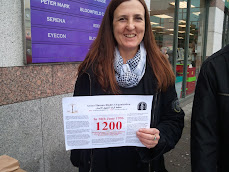
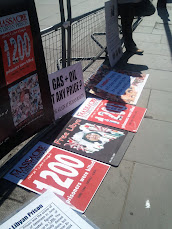
The report highlights the failure to adequately address the notorious Abu Salim prison killings of 1996 in which up to 1,200 detainees are believed to have been extrajudicially executed following a riot. A promised investigation has not materialised and families of victims have been offered compensation on condition they do not resort to the courts.

The cases of dissidents Jabalah Matar, Mansour al-Kikhiya and others, who disappeared in Egypt, remain unresolved. There have been no efforts to investigate the "physical liquidation" of opponents of the regime during the 1980s.

Amnesty's mission, like a recent one by Human Rights Watch, was facilitated by the Gaddafi Development Foundation, run by the leader's reformist son and possible heir, Saif al-Islam. But planned prison visits were curtailed and researchers were unable to conduct activities independent of the GDF programme such as meet families of victims of human rights abuses.

Libya has seen "tangible but modest" improvements in freedom of expression but state control is still tight, says Amnesty.

Migrants, refugees and asylum seekers from elsewhere in Africa attempting to seek sanctuary in Italy and the EU face arrest, indefinite detention, and abuse, the report finds. Libya is not a signatory to the 1951 UN convention on refugees and this month, the authorities ordered the UNHCR to leave.

"The human rights situation in Libya remains dire," the report concludes. "Officials responsible for gross human rights violations remain above the law and enjoy total impunity. On the other hand, thousands of individuals are completely outside the protection of the law and continue to suffer in silence and isolation, seeing little hope in the 'Libya of tomorrow', a slogan frequently repeated by Saif al-Islam al-Gaddafi."

Amnesty's Middle East and North Africa deputy director, Hassiba Hadj Sahraoui, said: "If Libya is to have any international credibility, the authorities must ensure that no one is above the law and that everyone, including the most vulnerable and marginalised, is protected by the law.

"The repression of dissent must end. Libya's international partners cannot ignore Libya's dire human rights record at the expense of their national interests."


Ian Black, Middle East editor guardian.co.uk, Wednesday 23 June 2010


.Document - Libya: Four arrested amid fears of Amazigh culture crackdown
AMNESTY INTERNATIONAL

PUBLIC STATEMENT

AI Index: MDE 19/001/2011

6 January 2011

Libya: Four arrested amid fears of Amazigh culture crackdown


Amnesty International today called on the Libyan authorities to immediately clarify the whereabouts and legal status of four men – two Libyan and two Moroccan nationals – held in Libya seemingly in connection with Amazigh cultural or academic activities. The organization expressed concerns that the four men might be held solely on account of their perceived interest in Amazigh language and culture, in which case they would be prisoners of conscience.

Two Libyan twin brothers, Mazigh and Maghris Bouzahar, were arrested on 16 December 2010 from their home in Tripoli allegedly by members of the External Security Agency, an intelligence body. Their relative, residing in Canada, told Amnesty International that they were taken for questioning in relation to a meeting one of the brothers held with an Italian student visiting Libya. They have been held ever since.

The Italian student was detained for about three weeks before being released and allowed to leave Libya on 24 December. According to Libyan Amazigh cultural rights activists in exile, he was interested in Amagizh language and culture in Libya.

Several days after the arrests, members of the External Security Agency returned to the home of the Bouzahar brothers and confiscated a number of items, including all books related to Amaghiz culture and a computer.

A few days after the arrest of the Bouzahar brothers, news emerged in Morocco that two Moroccan nationals, Al-Mahfouz Asmhari and Hassan Ramou, had been arrested in Libya. The two are researchers at the Royal Moroccan Institute for Amazigh Culture, respectively, in the Centre of Historical and Environmental Studies and the Centre of Sociological and Anthropological Studies. They had travelled to Tunisia in the framework of their academic research, and are believed to have visited Amazigh artifacts. They are reported to have travelled to Libya from Tunisia on 14 December. They reportedly spent the next four days in Nalut, in the Western part of Libya in the Nafusa Mountains, famous for its Amazigh granary. Their families in Morocco lost contact with them since 19 December, the day before they were meant to travel back to Tunisia. They are believed to have been arrested by members of the External Security Agency and to be held at an undisclosed location.

The four men continue to be held by security agencies reportedly without charge in breach of Article 26 of the Libyan Code of Criminal Procedure which sets the limit of 48 hours for law enforcement officers to refer suspects to the Department of Public Prosecutions unless accused of certain offences, including those “against the state”, in which case suspects can be remanded in custody for up to seven days. Article 26 further stipulates that the Department of Public Prosecutions must question the accused within 24 hours and then issue an order for release or detention. Further, the four are reported not to have access to lawyers in contravention to Law No. 47 of 1975 on prisons. On numerous occasions, Amnesty International has raised concerns that security agencies in Libya continue to wield extensive and unchecked powers and breach Libyan legislation as well as human rights law and standards with total impunity, including provisions of the International Covenant on Civil and Political Rights (ICCPR) relating to arbitrary arrest and detention and judicial safeguards.

Amnesty International calls on the Libyan authorities, at the very least, to grant the four men immediate and unimpeded access to their lawyers and families. The two Moroccan nationals should also be granted access to their consular representatives.

Amnesty International is also concerned that the arrests of the four men might be a result of the Libyan authorities’ intolerance to activities perceived as promoting the Amazigh cultural or linguistic heritage. As a state party to the ICCPR, the International Convention on the Elimination of All Forms of Racial Discrimination and the International Covenant on Economic, Social and Cultural Rights, Libya is under the obligation to guarantee that all people are protected from discrimination on any grounds including ethnic, linguistic or cultural ones and must have the right to take part in cultural life. Should the four men be detained on account of their peaceful academic, linguistic or cultural activities, Amnesty International would consider them to be prisoners of conscience and call for their immediate and unconditional release.


Background

The Libyan authorities claimed in their submission to the Committee on the Elimination of Racial Discrimination in 2003 that all Libyans are of a “common racial origin, all profess Islam and speak Arabic”. The state report added that: “The fact that all Libyan citizens share a common origin, religion and language has undoubtedly been a determining factor in the absence of racial discrimination in the country”. Groups based abroad, such as the Libyan Working Group, the Tabu Front for the Salvation of Libya, and the World Amazigh Congress disagree with this assessment and argue that the Libyan Nationality Code is inherently discriminatory in defining citizenship as “Arab”. Such groups also complain that the Amazigh language and culture is not recognized and that obstacles prevent the Amazigh community from preserving their language and culture. For example, Law No. 24 of 1369 prohibits the usage of languages other than Arabic in publications; official documents; public spaces; and private enterprises. Additionally, Article 3 of Law No. 24 prohibits the use of “non-Arab, non-Muslim names” as determined by the General People’s Committee [ equivalent to prime minister’s office]. The law provides no opportunity for parents to appeal against the decision of the General People’s Committee.

Libyan authorities also seem to show little tolerance towards Amazigh cultural rights activists, even those based abroad. In November 2009, the Libyan authorities deported Khaled Zerari, deputy head of the Word Amazigh Congress from Libya upon his arrival from Morocco to attend the funeral of a known Amazigh figure in Libya. After questioning him for several hours at the airport, Libyan law enforcement officials forced him to board a flight to Rome, from where he returned to Morocco. No official reason for the ban was provided, but it is believed that he was prevented from entering Libya due to his activism for the rights of the Amazigh in North Africa.

Dec 26, 2010

Anti-War Activism Works!

1. Anti-War Activism Works!
The recent leaks by the web site WikiLeaks shows that the Irish Government were worried about the public reaction to the continued use of Shannon Airport by the US Military, during the 2007 Elections. This cable, which you can read in full by following this link (http://wikileaks.ch/cable/2006/09/06DUBLIN1020.html) demonstrates that the government tried to impose more restrictions on the US Military as the election approached.

A prolonged campaign of anti-war activism by people like YOU had an affect on the Government and we can do more we can remove the US Military from Shannon for good.

During the 2007 general election campaign the Irish Anti-War Movement (IAWM), The Peace and Neutrality Alliance (PANA) and other anti war activists published a pledge, which we asked politicians to sign stating that they would not be part of a coalition that did not stop the US Military from using Shannon. The Irish-Anti War Movement intends to work with other anti-war activists again during this election campaign; more details on this will follow.

The point of campaigning in the elections is to highlight that Shannon is still an issue in an election campaign that will be dominated by the economy.


--------------------------------------------------------------------------------


2. What can I do Right Now to Get the US Military out of Shannon

1.Reply to this e-mail if you want to make the war an Election issue and leave your contact details so that we can work with you.
2.Attend the Shannon Vigil that is held every month see (www.shannonwatch.org) for details.
3.Read the WikiLeaks information, which is linked to in this e-mail.
4.Prepare yourself to argue against those who are in favour of the use of Shannon below are some common arguments which are often used to justify the use of Shannon.
5.Organise with other anti-war activists you know to make the war an election issue.
6.Join us on FaceBook.
7.Contact your local TD and ask them for their position on the use of Shannon Airport. (TD’s respond better to their constituents than to a bunch of activists).
8.Register to Vote to see if you are registered go to http://www.checktheregister.ie.


--------------------------------------------------------------------------------


3. Defeating the Arguments in favour of the US Military Presence in Shannon.

3-1. If The US Military Leave the Airport Will Close
There are people who say, "If the US Military leave then Shannon Airport will close therefore we need to put aside our dislike of what is happening and allow them to stay".

This is a horrible argument, not only is it untrue it also ignores the fact that hopefully very soon the wars in the milled-east will end. What happens then do we live in hope that another war will start!

3-2. All The US Companies will Leave
Another argument that is often used in favour of the US Military being allowed to stay is "All the US Companies will leave Ireland if we ask the US Military to leave". This is nonsense the US companies who come to Ireland do not care whether we allow Shannon airport to be used by the US Military they are here to make money nothing more. The fact that the US Military was allowed to use Shannon did not stop DELL from leaving Limerick.

3-3. There is No Evidence that prisoners have been transported through Shannon
This is one of the arguments that is used by the government. They say that there is no evidence that anyone has been rendered (kidnapped from a country without due-process) and brought through Shannon.

This is true the planes have never been searched so there would not be any evidence.

Dec 22, 2010

Poets for Human Rights

Words of Freedom

A message to all members of Poets for Human Rights

2010 Poets for Human Rights Annual Awards event was

held Sunday, December 12, 2010 at the Artists in Action Gallery in Clearwater, Florida


The event was hosted by Stazja McFadyen, Poets for Human Rights co-founder, who opened the program by reading the "Clearwater Human Rights Week" proclamation, presented to Poets for Human Rights and Youth for Human Rights Florida by the Mayor of Clearwater.


The 2010 Anita McAndrews Award poetry contest was introduced by Kate Sweet, one of the contest sponsors. Kate discussed the humanitarian works of Anita McAndrews, including tutoring disadvantaged youth and exposing human rights violations of patients at a mental institution in Panama. Anita was also a prolific writer, poet and fine artist.


The winning poem and two honorable mentions were presented:


2010 Anita McAndrews Award Winner – “I Ask My Granddaughter...” by Elizabeth Thomas.

Elizabeth is a widely published poet, performer, teacher and advocate of the arts. As an outstanding advocate of youth in the arts, Elizabeth Thomas is a coach and organizer with Brave New Voices: International Youth Poetry Slam and Festival. She is also the founder of UpWords Poetry, a company dedicated to promoting programs for young writers and educators, based on the belief that poetry is meant to be heard out loud and in person. She lives in Connecticut.


“When I saw the award email in my inbox, I didn’t expect my poem had won. I am thrilled to receive this award. As a poet and educator, I’ve worked with young people from around the world. I like to think the writing we do together offers a voice to many who would otherwise be silent or sad or alone.”


I Ask My Granddaughter...

And she says
"School was fun today.
I didn't worry at all."
As she rocks in my lap
black curls sweep my cheek,
subtle scent of cinnamon rises.
I wrap her close and ask,
"Honey, why would you worry?"

No stray bullets
track through her neighborhood.
She can pull a chair to the living room window
and look out
without fear,
watch birds eat from the feeder
she made at school.

There are no IEDs,
no unexploded cluster bombs
near her jungle gym,
nothing to detonate
when dug from the earth
with a plastic red shovel.

No janjaweed militia
rides horseback through the streets
to force her chubby finger
around the trigger of a gun,
no men dressed as monster
to push her to the front line.
She will not be asked
to strap explosives to her belly,
to martyr herself in a marketplace.

When she goes to school
the shelves overflow
with books,
the room with teachers.
After lunch,
she'll nap
with her favorite Dora the Explorer blanket -
while outside the window
a large black bird
pecks at the glass
trying to break in.


(Read by Stazja McFadyen)


Honorable Mention - “Dilemma” by Jack Thompson, Florida


Dilemma

(What to do with Man)


You can teach him to obey the law

and follow every sign;

You can teach him not to think

but think the thoughts that you opine.

You can even drug his senses

into catatonic sleep –


But when he dreams, he dreams of freedom.


You can train him like a monkey

and put him through his paces;

Tax and sweat and drive him

and make him run rat races.

You can work him dawn to dusk

‘til he collapses with exhaustion –


But when he dreams, he dreams of freedom.


You can cage him like a beast

and he’ll forget about ambition;

You can force obedience, at least,

or trick his willful submission.

You can carve his body slowly

‘til he begs for bliss unconscious –


But when he dreams, he dreams of freedom.


You can kill a man again, and again, and again,

but he will always come back –


And when he dreams, he dreams of freedom.

And when he dreams, he dreams of freedom.


(Read by Sioux Hart)


Honorable Mention - “A Teenager Ponders a New Kind of Knownness” by Lynn Veach Sadler, North Carolina


A Teenager Ponders a New Kind of Knownness


Social activist Nancy Pocock, a Quaker,

Refugees called her “Mama Nancy.”

She sounds a lot like Mother Teresa.

Both of them are dead now.


The refugees had her name

scrawled on little pieces of paper

they carried in their hands from

Guatemala, El Salvador, Iran, wherever.

Even draft dodgers from the USA

during The War in Vietnam.

Wonder if she ever met Jane Fonda?


Can you imagine

the kind of being knownness

Mama Nancy had?

Rad awesome!


© Lynn Veach Sadler


Winners of the 2010 Year of Youth Poetry Contests, youth category and children's category were announced.


2010 Year of Youth Poetry Contest Winner – “Questions” by Andrew David King.

Andrew is 18 years old, and attends U.C. Berkeley. This is his second contest win. He was awarded the Alex Popoff Youth Poetry Contest Award in 2009 for his poem, “Eggshells Tiananmen Square, June 5, 1989.”

Questions

The small daisy he stuck between
my helmet strap and stubbly chin
had already begun to wilt. Slowly, it returned its borrowed color
to the earth, leaving a brown stem in place of vivid green.
I kept walking on as the leaves and petals cascaded toward
the rutted street. Only I did not feel them fall—I felt a small hand
reach past my face to fasten a flower to me,
and touch something deeper.


This is what Ali did the day his father left.
If I could return to that time,
I wouldn’t ask any questions.
I wouldn’t ask Ali if his father was returning
sometime soon. His father always came back, Ali told me—
always. I wouldn’t question the low, flat horizon,
the edge of the earth waiting for me to fall off of it.
Nor would I have anything to ask of the wind and its
pressured air, spilling out from lungs
squeezed too tight by armor.


Sometimes, after a day when I have been strong
in the face of danger, I want to ask
what it is, exactly, that makes my muscles loosen
and quiver—I know it is not solely bullets or the thunder of gunfire.
But I do not ask these questions any longer—
instead, I look to the horizon in twilight
and watch how the flaxen daylight dissipates into onyx,
punctured only by the sporadic fires
of cities and hearts;
how a small boy waits by a window
for a familiar light down the road to draw nearer
night after night.


(Read by Alan Graham)


2010 Year of Youth Children’s Poetry Contest Winner – “A World of My Dreams” by Suvansh Raj Nirula.

Suvansh, aged 14, lives in New Delhi, India and is a 9th grader at Delhi Public School.


A World of My Dreams

As I tread outside smiling
The joy of freedom seems to have gone missing
The feeling of equality and security
Overtaken by the sights of torture and misery

Trust and faith lay shattered
Families divided, growing hatred
Scarcity of food, education in shambles
Is this the gift for the next generation?

Why is there no war against poverty
Why no war against illiteracy
Why no one to fight the war against hunger
And why no one to fight War on AIDS, the biggest danger

As the bullets fly and bombs explode
The howls of crying babies go loud
The scare and pain of getting orphaned
In their mind, always embedded

Few faces of evil and cruelty
Seems to be creating havoc for the majority
Why are they using their ability
To fight this WAR ON HUMANITY

In a flash, walking, I feel so lonely
Tears flowing on feeling their hunger and poverty
Hoping for a home and education for all
I pray for universal peace and health for all

I feel, not for me, but for us all here
I pray for a world where cruelty to humans, no one hears
But, I ask, “Can my prayers ever come true”?
YES !! Only if with me I also have ALL OF YOU.


(Read by Stazja McFadyen)


Other poets who read at the event:

Elyse Van Breemen - read two poems by Anita McAndrews

Malcolm Johnson

Renee Duke

Magdy Battikha

Helen Henry - sang her poem, accompanying herself on piano.


A special presentation was made by Denise McGahee, Executive Director of Youth for Human Rights Florida, who presented copies of Youth for Human Rights DVDs to audience members. Dustin McGahee, President of Youth for Human Rights Florida, sang two original human rights songs, accompanying himself on acoustic guitar.


The event closed with an audience participation reading of the Universal Declaration of Human Rights.


Visit Poets for Human Rights at: http://poetsforhumanrights.ning.com/?xg_source=msg_mes_network

CIA forms WikiLeaks Task Force to gauge leaks impact


By JPOST.COM STAFF

US intelligence agency scarcely mentioned in cables, but wishes to check if ability to recruit informants hurt by whistleblower.
The CIA has decided to launch a panel, entitled the WikiLeaks Task Force, in order to gauge the effect of the leaking of thousands of US diplomatic cables by the whistleblower website, the Washington Post reported on Wednesday.

The US intelligence agency is launching the task force despite the fact that the CIA has been relatively untouched by the leaks.

RELATED:
WikiLeaks' Assange complains he's victim of leaks
2008 WikiLeaks cable shows US envoy’s astute insight

A major issue the panel plans to address is whether the CIA's ability to recruit informants was damaged by the belief that the US government is unable to guard its secrets.


"The director asked the task force to examine whether the latest release of WikiLeaks documents might affect the agency's foreign relationships or operations," the paper quoted CIA spokesman George Little as saying.

The release of the US diplomatic cables has caused Washington and several of its allies embarrassment.

Shortly after the initial release of the cables last month, US Secretary of State Hilary Clinton said the US is taking "aggressive steps" to find those responsible for the release of documents by WikiLeaks.

She explained that every country must be able to hold private conversations on concerning issues. She added that confidential communication is fundamental in the ability to serve public interest.

Clinton expressed confidence that the partnerships and relationships built by the Obama administration will withstand the challenge posed by the WikiLeaks exposure.

Dec 13, 2010

Commemorating 17th anniversary of Dr. Mansoor Alkikhia abduction


Dr Manssor Alkikhia is a Libyan who was a trustee of the council of the Arab Human Rights Organizations. He was known activist of human rights and he was in contact with the Libyan opposition in exile as it is revealed by document No: 1 below. Gaddafi since long time known to prepare for the revolutionary committees of the assassination squads. This was sent to Egypt, Britain and Europe to assassin and silence his opponents in exile. Few opponents were killed in the Streets of London. As it did happen in killing British police woman Yvonne Fletcher 17 April 1984, in the process of Gadafi’s assassination squad firing on Libyan demonstrators in front of the Libyan embassy in St. James’s square Piccadilly. Dr. Mansoor Alkikhia went to Cairo to attend the conference of the Arab Human Rights Organizations in the international day of human rights 10-12-1992.
Suddenly Dr. Mansoor Alkikhia was reported missing without trail to where about and how he was missing. The ambiguity of such crime is similar to many of Gaddafi’s mystery missing persons in and outside Libya. On 22nd April, 1992, Mansoor Alkikhia signed an agreement with the Libyan National salvation front which earned him Gaddafi’s rage and anger.


Figure 1


Similar abduction of the Libyan Sheikh M. Albishti happened in the eighties and after more than 20 years in 2004 Gaddafi’s son confirmed that he was killed by the regime. In another incident in under two hours Gaddafi terminated the life of 1200 prisoners of conscience who were never been tried in Abu Salim Prison in Tripoli in 29th June 1996. The families of those killed were coming to the prison with food and clothes to the prison gates and the guards took them thinking they will be given to the prisoners of conscience. This phenomena continued to happen up to 2004 when Gaddafi openly said they were killed. More likely a similar event was the abduction of Mosa Assadr a shieht clerk founder of Amal movement who was in Libya at that time. In 1978 Gaddafi alleged that Mosa Assadr took the aeroplane to Italy while the Italian confirmed no such a person came through its airports. His family still insisting that they should know the real story. Gaddafi offered Mosa Assadr’s family blood money or compensation but they turned it down and they insisted he is alive and they want him back.
The abduction of Mansoor Alkikhia seems to be similar to that of Mosa assadr where it happened while travelling. Therefore, the offender is one in many ways. Although it is a speculation up to now whether he was abducted or killed, indeed it was his contact with the Libyan opposition in exile that made Gaddafi and his followers to abduct him.
Araya Human Rights Organization holds Gaddafi and his regime responsible for the abduction of Dr. Mansoor Alkikhia. There should be an independent international inquiry into the case involving Libya and Egypt to determine Dr. Mansoor Alkikhia fate once and for all.

Administration

JOHN PILGER'S NEW FILM: THE WAR YOU DON'T SEE on ITV


JOHN PILGER'S NEW FILM: THE WAR YOU DON'T SEE on ITV this Tuesday 10.30 - 12.00pm ...... and threats to WIKILEAKS.

This is a must watch for all anti-war activists. Pilger's latest film explores how the media beats the drums for war.

It is particularly important now given the attack on Julian Assange, the founder of Wikileaks, who is interviewed in the film. Assange is currently under arrest in Britain on spurious charges and is now under threat of extradition to Sweden where he may then be deported to the USA. Some politicians and right-wing commentators in America are
calling for him to be jailed for decades or even executed. The Swedish Government, as Wikileaks exposed, is deeply incriminated in George Bush's 'War on Terror'.

Over the past two years Wikileaks has proved itself repeatedly to be a true servant of democracy and an enemy of lying warmongers. All anti war activists should support it and support the campaign for its founder, Julian Assange, to be granted bail which would be normal for the type of charges brought against him.

Julian Assange next appears in court on Tuesday 14 December. The British based Stop the War Coalition has called a protest at 1.00 pm outside the Westminster Magistrates Court. It has also initiated an open letter (LINK BELOW) of support for Wikileaks and Julian Assange, signed by among others, John Pilger, former UK ambassador Craig Murray, actors Miriam Margolyes and Roger Lloyd-Pack, Salma Yaqoob, writers Iain Banks and A L Kennedy, artists David Gentlemen and Katharine Hamnett and comedians Alexei Sayle and Mark Thomas.

OPEN LETTER / PETITION SUPPORTING WIKIPEDIA
Signed by John Pilger, Craig Murray, Mark Thomas, Salma Yaqoob and many more.
READ LETTER & FULL LIST OF SIGNATORIES HERE: http://bit.ly/hkUVKS

Watch Pilger's new film on ITV this Tuesday ...... and support Wikileaks and its founder Julia Assange.

* The War You Don't See: trailer: http://bit.ly/gwzqRE
* Interview with John Pilger about the film: http://bit.ly/fQ4roG
* Cinemas in Britain where the film is showing: http://bit.ly/goNuIc

The Film Interview: John Pilger
How journalists help to promote war - and what can be done to stop it.

John Pilger is a journalist, documentary maker and New Statesman columnist. His new film, "The War You Don't See", is in cinemas from 13 December and will be broadcast on ITV1 on 14 December. More details here.

Q. The War You Don't See is about the media's role in promoting and sanitising contemporary wars. Why make this film at this particular moment?

I have been writing and making films about media and war for many years. Translating this critique to film, especially the insidious power of public relations, has been something of an ambition. Peter Fincham had just taken over as director of programmes at ITV two years ago and clearly wanted to restore some of ITV's factual legacy. He was enthusiastic about the idea; he also knew the film would be critical of ITV. That's unusual.

Since I first went to Vietnam as a young reporter, I have been aware of the rituals and undercurrents and pressures within journalism that determine the news as much as the quality of the news itself. Broadcast journalism has a powerful mysticism; the BBC pretends that it is objective and impartial in the coverage of most things, especially war. The pressure to believe and maintain this pretence is almost an article of faith. For the public, the reality is very different. The University of Wales and the montoring organisation Media Tenor conducted two studies of the TV coverage in the lead-up to the invasion of Iraq. Both found the BBC overwhemingly followed the government line: that its reporting of anti-war views amounted to only a few per cent. Among the major western broadcasters, only CBS in America had a worse record. The public has a right to know why.

Q. Why do you think journalists who reported on the Iraq War - a number of whom you interview in the film - are now so willing to admit they did not do their jobs properly? What prevented them from realising that at the time?

The atmosphere has changed. No one is in any doubt now that the reasons for the invasion of Iraq were fraudulent, as are the reasons for invading Afghanistan, as were the reasons for invading Vietnam. Still, the journalists who describe in my film where it all - and they - went wrong are courageous. I asked a number of others to appear, such as Andrew Marr and Jeremy Paxman, and heard nothing back. Indeed, the more famous the name, the greater an apparent unwillingness to discuss why, as Paxman told a group of students, they were "hoodwinked".

Q. Do independent online sources - Wikileaks being the most prominent example at the moment - allow the public to bypass corporate media entirely?

Yes, but remember the public's principal source of information is still television. The main BBC News programmes have enormous influence. Certainly, as Wikileaks has demonstrated, the agenda of the "mainstream" is increasingly guided by the world wide web. For me, as a journalist, the web offers the most interesting and often most reliable sources because they are shorn of the consensual bias, and a censorship by omission, that pervades broadcasting.

Q. Understandably, your focus is on war reporting. But the film also suggests that our entertainment industry plays a role in disseminating propaganda. How can that be effectively countered?

There is no propaganda machine like Hollywood. As Ken Loach pointed out recently, the great majority of movies in British cinemas are American, or British with American funding. This has led to the appropriation of both fact and fiction: of art itself. Edward Said describes the effect in his book Culture and Imperialism, pointing out that the penetration of a a corporate, imperial culture is now deeper than at any time. How do we combat it? We support independent film-makers and independent cinemas and distributors. We begin to think about journalism as a "fifth estate" in which the public plays a part and media organisations are held to account.

Q. Even when the harsh reality of war is reported truthfully and accurately, audiences can simply choose to ignore it. Are there particular techniques you pursue in your film-making to avoid this happening?

Surely, the responsibility of persuading and challenging people, of exciting their imagination, belongs to us film-makers and journalists. Blaming the public is an admission of our own inadequacy. My experience is that people will respond positively if you make the connection with their own lives, or attempt to articulate the way they worry about the world, its wars and other upheavals. If you call power to account with facts, you get the reward of support from an audience. In other words, when people realise you are their agent, not an agent of a monolith called "the media", or of other powerful interests, they give you their time and interest. That makes journalism a privilege.

END

Dec 6, 2010

Mohamed Eljahmi’s speech about human rights in Libya At an American Jewish Committee’s event in Newton, MA - Monday, December 6, 2010


Mohamed Eljahmi’s speech about human rights in Libya At an American Jewish Committee’s event in Newton, MA - Monday, December 6, 2010

Let me begin by thanking the American Jewish Committee and its Executive Director David Harris. On December 2, 2010, the American Jewish Committee condemned Turkey’s Prime Minister for accepting the Qadhafi’s International prize for human rights. This is significant because by condemning the Turkish Prime Minister’s acceptance, AJC stood with the Libyan people while Arab and Muslim organization remain silent. Again, thank you AJC!

With regard to this evening’s topic, let me start by saying that the UN has failed to protect human rights in countries where citizens are at their most vulnerable. It doesn’t take a great deal of wisdom to know that the Qadhafi regime is one of the world’s worst violators of human rights. Yet, in 2003 Libya was elected to chair the UN Human Rights Commission and in May 2010; Libya won election to the UN’s supposedly reformed human rights body, the UN Human Rights Council.

Libya’s record and practices demonstrate its contempt for the basics of human rights. Peaceful Assembly and organization are banned and Collective Punishment is enshrined in law.

In Libya, political parties are banned and memberships in independent labor unions or parties are crimes punishable by death. There is also the Collective Punishment law or “Honor Law”, where the State has the right to punish family, city or an entire region for the wrong doing of individual(s).

Another Libyan practice is the demand for absolute loyalty to Qadhafi:

The fulfillments of Libyan citizens’ needs are tied to their absolute and unquestioning loyalty to Mr. Qadhafi. Ordinary Libyans are accountable to a vast security apparatus. Their actions are scrutinized by Orwellian institutions. Should they fail scrutiny, they face Qadhafi’s ruthless death squads, the “Revolutionary Committees”.

Such is the structure of Libya, a country that now sits on the UNHCR and sits in judgment over democracies. Its practices are worse. Allow me to provide you with just three examples of how Libya puts its theoretical contempt for human rights into brutal practice.

The first example is the one that is the least known, the Abu Sleem prison massacre.

In June 1996, Libyan state security massacred some 1,200 political prisoners at the Abu Slim prison, south of Tripoli. To date there has never been an independent investigation into what happened or where the 1,200 bodies are buried. To this date, the families of Abu Slim victims have been unable to give traditional Islamic burial for their loved ones.

The second example is Mansour Kikhia, Libya’s former UN Ambassador. Kikhia came from the family with a long history of service to Libya. He had been a human rights activist, Libya’s foreign minister and ambassador to the UN, but grew disgusted with Qadhafi’s repressive rule. In 1980 Kikhia defected to the United States. In late 1993, he travelled to Cairo to attend an Arab human rights summit. Kikhia was US resident and married to a U.S. citizen. Yet on December 10, 1993, a day that the UN has designated as human rights day, Kikhia was kidnapped by Egyptian agents from his Cairo hotel. The Egyptians handed Kikhia over to the Libyan regime, which executed him. His body has never been recovered. Kikhia left behind a wife and two young children.

The third example is my brother Fathi Eljahmi, who dared to call for change in Libya. Fathi was a visionary, blessed with a great mind and a passion for equality and justice. Professionally, he was a civil engineer, an entrepreneur, a former governor of the Gulf province and also former chairman of the Libyan National Planning Commission.

Fathi was first imprisoned on October 22, 2002, because he presented to the Basic People’s Congress a vision for healing Libya and re-defining its relationship with the outside world. Fathi called for the creation of a constitution, a civil society, for free speech, for free enterprise, for investigation into the Abu Slim prison massacre, the war in Chad and the resolution of the Lockerbie bombing, which by the way had led to the economic blockade against Libya. He called on Qadhafi to show sincerity to his own people.

Fathi was released on March 12, 2004 thanks to the intervention of U.S. politicians, among them then Senator Joe Biden. Fathi refused to be silenced and continued his call for freedom and human rights. On March 26, 2004, Fathi was abducted by Libyan Security and held until his death on May 21, 2009.

During those five years of imprisonment, he endured intense torture, isolation and slow death. He was kept away from his family for nearly two years. He was shackled in a windowless room without sunlight and served food that was not fit for human consumption. For two years, he was deprived of medications for hypertension, advanced stage diabetes, and a heart condition.

The result of the Libyan regime’s slow medical torture and neglect was that Fathi slipped into a coma. The Libyan regime did not even allow him to die in his own country. On May 5, 2009, the Libyan regime flew my comatose brother to a hospital in Jordan where he died. He returned home in the cargo hold of a passenger jet.

By contrast, Abdelbaset Mohmed Ali al-Megrahi , the terrorist responsible for the Lockerbie bombing, was released by the Scottish authorities in August 2009 and flown home in the company of the dictator’s son and senior Libyan officials on Qadhafi’s personal plane to a hero’s welcome. Scotland released the mass murderer al-Megrahi on “compassionate grounds”—compassion being precisely what the Libyan regime has always denied its citizens.

At the UN in Geneva, I have called on the UN Human Rights Council to launch an international and independent investigation in the Abu Slim prison massacre. I have called on the UN Human Rights Council to investigate Fathi’s imprisonment and to investigate torture in Libya. I also called for an investigation into the role played by the Arab Medical Centre in Amman, Jordan, where my brother died. The Arab Medical Centre in Amman refuses to turn over Fathi’s medical report to the family.

What has happened to my calls for investigations? Thus far, nothing. The UN did nothing for human rights in Libya even when Libya was an international pariah. Today Libya sits on the UN Human Rights Council. Qaddafi gives speeches by video link to students at Columbia University and the London School of Economics.

I would like to end by thanking all those human rights activists such as Joshua Rubenstein and Felice Gaer for their efforts on behalf of the victims of the Libyan dictatorship. And may every victim of Mr. Qadhafi’s terror rest in peace. Thank you.
Al Mostakbal

Dec 5, 2010

Wikileaks’ Libya nuclear threat ‘not yet verified’ – government


Wikileaks’ Libya nuclear threat ‘not yet verified’ – government
Mark Micallef


Libyan leader Muammar Gaddafi is said to have been humiliated during a trip to New York. Photo: AFP
The Foreign Ministry yesterday brushed off the latest Wikileak revelation in which Libya’s Muammar Gaddafi is said to have risked a spill of highly enriched uranium late last year in retaliation for being “humiliated” during a trip to New York.

“The ministry cannot comment on facts that have not yet been verified,” a spokesman for the ministry said.

The leaked cables, published yesterday, claim that Libyan authorities purposely delayed delivery to Russia of a consignment of spent nuclear fuel, which was left on the tarmac of the Tajura nuclear facility, 14 km east of Tripoli, with a single armed guard for almost a month.

The highly enriched uranium, which can be developed and used in a bomb, was meant to be collected in November last year by a heavy transport aircraft, as part of an international deal under which Libya’s nuclear waste is handled and disposed of by Russia.

However, the aircraft was sent back without the cargo because Mr Gaddafi had taken offence at his treatment during his visit to New York to address the UN two months earlier, according to the author of the cable, US ambassador to Tripoli Gene Cretz.

Mr Gaddafi had felt “humiliated” after he was prevented from pitching his Bedouin tent in New York and from visiting the Ground Zero site of the September 11, 2001 attacks, Mr Cretz reports in the cable.

US and Russian diplomats scrambled to resolve the crisis since the uranium containers were only intended for transport not storage, meaning they could start leaking in as little as a month. The aircraft eventually left Libya on December 21.

However, the Maltese government yesterday was unwilling to say if it will ask Libya for more information.

Labour’s environment spokes­man, Leo Brincat, who as party foreign affairs spokesman in 2008 was not against France’s plan to sell Libya a nuclear-powered desalination plant, was also cautious. However, he said neighbour states should be given guarantees about nuclear safety.

“Whether the Maltese government had sought and obtained such guarantees remains a big mystery so far, particularly in the absence of adherence to certain established international conventions,” he said.

Mr Brincat expressed concern, especially in the wake of an accident at a nuclear reactor in the south of France in 2008, which reopened the debate on the safety of nuclearising the Mediterranean.

However, he stood by the stand taken in 2008, when he said that Libya should not be discriminated against if it wanted to develop civilian nuclear power plants, on the lines of those in Europe.

AD spokesman Arnold Cassola was not so guarded. “This is further confirmation of the irresponsibility of the Gaddafi administration which doesn’t think twice before blackmailing people,” he said, referring to last week’s warning by the Libyan leader to the EU that Libya would no longer block migration to Europe unless it was paid €5 billion a year.

“Of course, the Maltese should react extremely strongly to this. Beyond nuclear security considerations, nobody seems to realise that we extract 60 per cent of our water from the Mediterranean sea around us. If there is this irresponsibility concerning one of the most dangerous toxic substances like uranium which is left unguarded and which can be abused... then the Maltese people will have a problem with their daily survival.”

He insisted the government should take a strong stand and berated both the Nationalist and Labour parties for their consensual silence when it comes to crises with Libya.

“This silence is probably prompted by economic inte­rests but if any accident happens in this area, the economic interests will be of little help. So, one has to be polite but firm rather than pretend that nothing is happening,” he said.